Science · 5 min read ·
Why repetition rewires belief
The ideas we hear most often start to feel true. Here's how to make that work for you instead of against you.
Think of a belief you hold about yourself. I'm bad with money. I'm not a morning person. I freeze when I speak in public. Now ask: where did it come from?
Usually not from a single moment. It came from a thousand small repetitions — a comment, a bad experience, the same thought replayed until it stopped feeling like a thought and started feeling like a fact.
The good news is that the same mechanism works in the other direction.
Familiar feels true
Psychologists have a name for one part of this: the illusory truth effect. In study after study, people rate statements they've heard before as more likely to be true than new ones — even when they were told the statement might be false. Familiarity is easy to process, and the brain treats ease as a signal of truth.
That's a quirk we can use. A new, helpful belief feels awkward the first time you hear it. By the twentieth time, it feels like something you've always known.
Paths through the forest
There's a neural side to this too. When you repeat a thought or behaviour, the connections involved get stronger and more efficient. Neuroscientists summarise it as neurons that fire together, wire together.
A useful picture is a path through a forest. The old belief is a wide, well-worn trail. The new one starts as a faint track you have to push through. Every repetition clears it a little more, and over time it becomes the easier route — the one your mind takes by default.
Why relaxed repetition works better
Repeating an affirmation while stressed often backfires. Say "I'm confident" while your heart is pounding and part of you immediately argues back: no you're not.
Relaxation turns that argument down. In the focused, calm state of a hypnosis session, the critical voice is quieter, so the new idea gets a fairer hearing. That's the core logic behind pairing repetition with hypnosis rather than relying on willpower alone.
Hearing and seeing
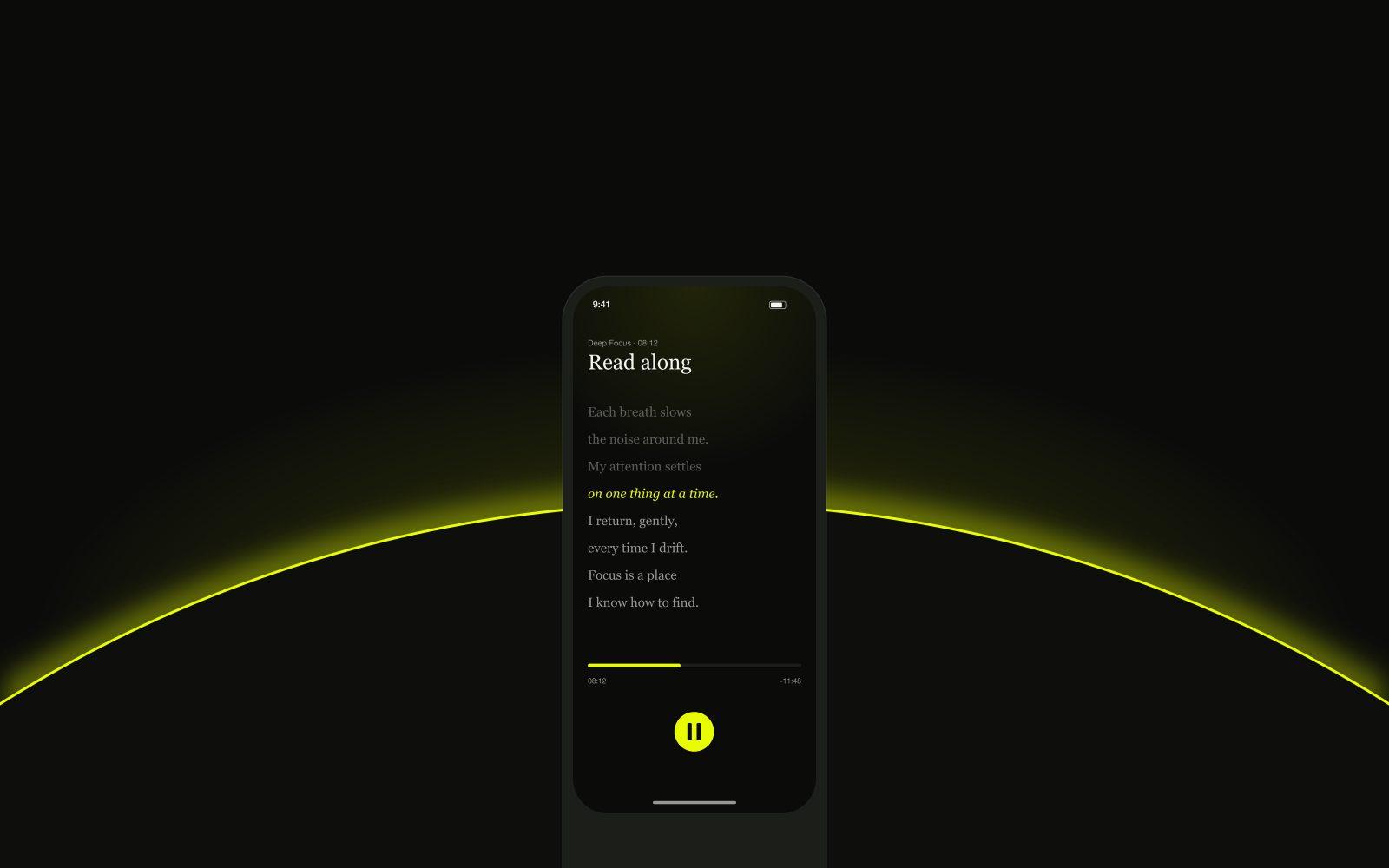
We also add a second channel. In read-along mode, the words scroll in sync with the voice, so each line is heard and seen at the same moment. Engaging more than one sense tends to make information easier to remember, and it keeps your attention on the session rather than letting it wander.
How much repetition is enough?
There's no magic number, and anyone who promises "21 days to a new you" is simplifying. Research on habit formation suggests new behaviours take anywhere from a few weeks to a few months to feel automatic, depending on the person and the habit.
What matters more than the exact count is consistency:
- Daily beats occasional. Ten minutes every day does more than an hour once a week.
- Same time helps. Tie your session to an existing routine, like brushing your teeth or getting into bed.
- One goal at a time. Splitting attention across five goals slows all of them down.
- Track it. A visible streak is its own kind of repetition — proof, every day, that you're the kind of person who shows up.
Notice the evidence
Beliefs update fastest when experience agrees with them. As you listen, pay attention to small moments that fit the new story — the meeting where you spoke up, the evening you didn't reach for your phone. Each one is another repetition, and it's one you lived rather than heard.