Guides · 4 min read ·
What self-hypnosis actually is (and isn't)
No swinging watches, no losing control. A plain-language guide to what happens when you listen to a hypnosis session.
Say the word hypnosis and most people picture a stage show: a volunteer clucking like a chicken while the audience laughs. It makes for good television, but it has very little to do with what happens when you put on headphones and press play on a session.
A focused state you already know
Self-hypnosis is a state of focused attention combined with deep physical relaxation. Your awareness narrows, the background noise of the day fades, and you become more receptive to the ideas you're paying attention to.
You've been in this state before. It's the feeling of being so absorbed in a book that you don't hear your name called, or driving a familiar route and arriving with no memory of the turns. Nothing mystical is going on. Your brain is simply allocating attention differently.
A guided session uses that state on purpose. A calm voice helps you relax, then introduces suggestions — short, clear statements about how you want to think, feel or act — while your usual inner critic is quieter than normal.
What it isn't
It isn't sleep. Even when you're deeply relaxed, part of you stays aware. If someone said your name or a fire alarm went off, you'd respond.
It isn't mind control. You can't be made to do anything that conflicts with your values. If a suggestion doesn't fit, it simply doesn't land. This is why the work is called self-hypnosis: you're choosing the direction.
It isn't a magic switch. One session won't rewrite a belief you've held for twenty years. What it does is give a new idea a fair hearing, without the immediate pushback you'd normally give it. Repeat that often enough, and the new idea starts to feel familiar — then true.
What a session feels like
Most sessions follow the same arc:
- Settling. Slow breathing and attention on the body help you let go of the day.
- Deepening. Counting, imagery or a slow descent help your focus narrow further.
- Suggestion. The core of the session — the affirmations and images tied to your goal.
- Returning. A gentle count back up, so you open your eyes alert and clear.
People describe the feeling differently. Some feel heavy, some feel light, some feel nothing in particular and assume it "didn't work." It usually did. You don't need to feel hypnotised for the suggestions to reach you.
Why reading along helps
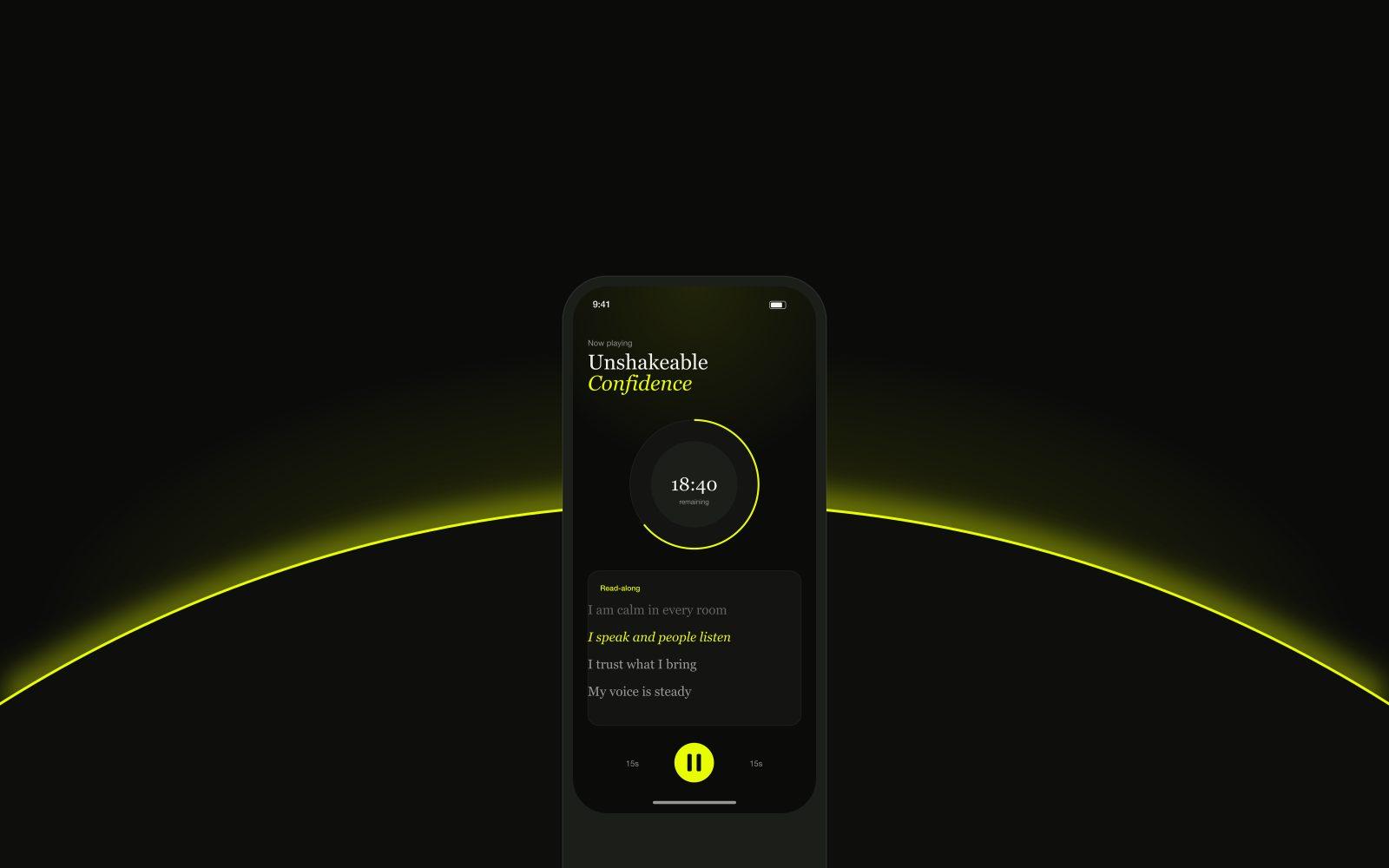
In our sessions the script scrolls in time with the voice, like lyrics. Hearing a sentence and seeing it at the same moment gives it two routes in. It also gives a busy mind something to hold on to, which makes it easier to stay with the session instead of drifting into tomorrow's to-do list.
Is it safe?
For most people, yes. It's a relaxation practice, and you stay in control throughout. If you live with epilepsy, psychosis or another condition where altered states could be a concern, talk to your clinician before you start. And never listen while driving or doing anything that needs your full attention.
How to start
Pick one goal. Listen once a day, ideally at the same time, for two to three weeks. Notice small changes — a conversation that felt easier, a night when sleep came faster. Those small wins are the new belief taking root.